How to choose the most suitable casement window?
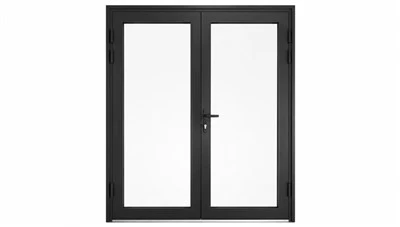
A casement window is one of the essential window types for all homes or workplaces. Simply put, a casement window is a type of window that is hinged to a frame, allowing the window to open inward or outward. Although the mechanical frame is the same, different types of casement windows may have slight differences and bring different appearances and feelings to your home or office space depending on the model you choose.


This article will introduce the types, parts and its functions, and performance of casement windows, and teach you how to choose the most suitable casement window for yourself.
TYPES OF CASEMENT WINDOWS
Divide according to materials


Wooden windows are a classic type of door and window. They are still widely regarded as one of the best window choices for effectiveness. Although wooden windows are more moisture-proof and thermally conductive than any other material, they also require the most maintenance. However, the vast majority of wooden windows nowadays have ethylene based coatings, which fully utilize the advantages of each material. Wood has long-lasting durability, making it a good choice if it fits your budget and your home's aesthetics.
If you are willing to maintain it regularly and do not mind drawbacks such as insect infestation, moisture deformation, and instability of wood, the beauty and environmental friendliness of wooden windows will be your choice.
UPVC doors and windows have good weather resistance. The modified UPVC adopts a special formula, and the raw materials are added with light and heat stabilizers, ultraviolet absorbers, low-temperature impact resistance and other modifiers, so that UPVC doors and windows have better weather resistance, aging resistance and UV damage resistance. It is used for a long time in the environment with severe changes in climate patterns, and will not deteriorate, embrittle and perform well under the attack of scorching sun, rainstorm, wind and snow, dryness and humidity at 30-50 ℃. At the same time, UPVC doors and windows are insulated and insulated. Compared to metal materials such as aluminum alloy doors and windows, UPVC doors and windows have a lower thermal conductivity, resulting in poorer thermal conductivity. Therefore, they have good insulation and thermal insulation properties. In addition, UPVC doors and windows are basically made of plastic shaped materials, and this type of material is mixed with a lot of air, which has good insulation and heat insulation performance. Therefore, this further increases the insulation and heat insulation ability of UPVC doors and windows.
However, UPVC doors and windows also have certain drawbacks. UPVC doors and windows are made of PVC material. Due to the generally large cross-section of PVC material, the material's light blocking area increases, resulting in the entire window area being about 5% -11% smaller than steel windows and about 4% -9% smaller than aluminum windows. Another issue is that the fire resistance of UPVC doors and windows is slightly poor, and toxic substances are emitted during combustion.
If your budget is low and it is not a place that is prone to fire accidents, UPVC doors and windows will be a perfect choice.
Aluminum alloy doors and windows have the following advantages:
Lightweight and sturdy: Aluminum alloy material is lightweight, but has high strength and is not easily deformed, and can withstand large wind pressures and impacts.
Strong weather resistance: Aluminum alloy doors and windows are not easily affected by humid, high or low temperature weather conditions, so they are suitable for various environments.
Good sealing performance: Multiple layers of sealing strips are used between aluminum alloy door and window frames and leaves, which can effectively prevent the infiltration of air and moisture, ensuring a comfortable indoor environment.
Beautiful and generous: Aluminum alloy doors and windows have diverse designs, which can meet the needs of different styles of home decoration and improve overall aesthetics.
But there are also some disadvantages:
High thermal conductivity: Aluminum alloy is a good conductor of heat, so its insulation performance is relatively poor. In cold winter or hot summer, more energy may be needed to maintain indoor temperature. So currently, what we mainly promote on Skate Window is thermal break aluminum profiles,which is contained PA66 insulation strips and insulation cutton.

Higher price: Compared to plastic steel doors and windows, aluminum alloy doors and windows are usually more expensive, which may increase the cost of decoration.
Poor electrical performance: Aluminum alloy has strong conductivity, and if lightning protection measures are not taken, there may be safety hazards.
High installation accuracy requirements: Aluminum alloy doors and windows require high installation accuracy. Improper installation may result in poor performance or shortened service life.
Skate Windows is a factory type enterprise specializing in aluminum alloy doors and windows for over 20 years, with rich experience. If you have a need for aluminum alloy doors and windows, please contact us. Our email is cassie.fu@skatewindow.com We are happy to send you the proposal and price for your reference.
PARTS OF A CASEMENT WINDOW AND THEIR FUNCTIONS
Here are the main casement window parts and their purpose :
- Window frame: The connecting part between a window and a wall.

- Window sash: A window sash is a part of a window used to secure glass and secure it in place. The material of the window sash is the same as the frame. It can be divided into movable window sashes and fixed window sashes.
- Handle: A handle is the component you use to open a window. When it rotates in one direction, it opens the window, and when it rotates in the opposite direction, it closes.
- Hinge: A casement window hinge is connected to one side of the window sash, allowing the window to open.
- Latch: When the window is closed, the latch holds it in place. It can also prevent the windows from opening uncontrollably.
- Support rod: A support rod is a horizontal hardware strip that supports the window when it is open to prevent wind damage to the window.
Choosing a good casement window, every part of it is crucial. Skate Windows will arrange a dedicated person to coordinate the relevant details with you, allowing you to choose the most suitable door and window for yourself.
PERFORMANCE OF CASEMENT WINDOWS
- Wind pressure resistance performance: refers to the ability of windows to withstand wind pressure without damage (such as cracking, panel damage, local yielding, bonding failure, etc.), as well as functional impairments such as hardware loosening and difficulty in opening, under normal closed conditions. This mainly depends on the resistance moment of the window's main load-bearing members and the reinforcement treatment during the design process.
- Air tightness performance, also known as air permeability, refers to the ability of a window to prevent air infiltration when it is normally closed. The better the airtightness, the less heat exchange and the less impact it has on indoor temperature.
- Water tightness performance: refers to the ability of a window to prevent rainwater leakage under the simultaneous action of wind and rain when it is normally closed. This mainly depends on the sealing effect of the opening part, such as using rubber strips or wool strips for sealing.
- Thermal insulation performance: The thermal insulation performance of a window refers to its ability to maintain indoor temperature when the window is normally closed. This mainly depends on the material and design of the windows. High quality windows should be able to block the temperature difference between indoor and outdoor, reducing the loss of heat energy.
- Sound insulation performance: refers to the ability of windows to reduce the propagation of sound from the source to the listener. Good sound insulation performance can effectively block the transmission of external noise and provide a quiet indoor environment.
80 series SKATE casement window performance form

Skate Windows looks forward to your arrival. For more information about the company, please click here.
If your house needs a new set of casement windows, or you want to replace another type of window with casement windows, there is no better company than Skate Windows.
We can customize various types of casement windows to meet your needs as much as possible.