


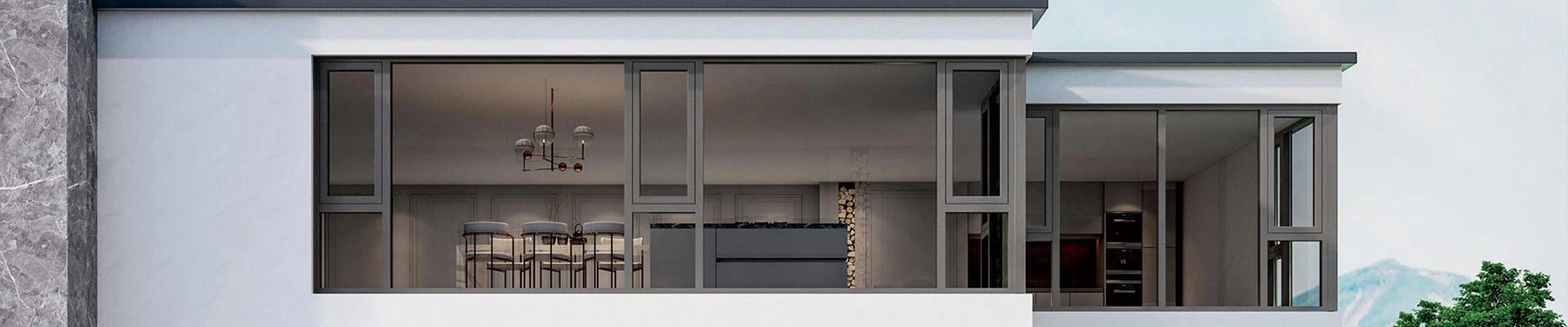
Wind pressure increases with height, and so do the demands on every window. SKATE high-rise windows use heavy-duty thermal break profiles, glass thickness sized to the wind load of each floor, and three-seal drainage design to stay watertight in driving rain.
The Challenges of Tall Buildings
Wind load
upper floors see much higher wind pressure than the ground floor.
Driving rain
water is pushed against and into the frame by wind.
Safety
sashes must stay secure; inward opening makes cleaning safe.
Weight and handling
large units must be packed and lifted safely on site.
How SKATE Windows Handle Wind and Rain
- Heavy-duty 6063-T5 aluminum profiles with up to 2.0 mm wall thickness (110H series)
- Wind load resistance of 5.0 kPa (grade 9, the top class of GB/T 31433), plus a 7.5 kPa safety test (Pmax)
- No water leakage at 700 Pa (grade 6, the top class)
- Air tightness grade 8 (the top class)
- Three-chamber profile: an outer water chamber with drainage, a middle insulating chamber, and an inner airtight chamber
- Laser-welded corners on seamless windows: joint strength of at least 85% of the profile and about 50% higher corner strength than crimped corners
Recommended SKATE Systems
110H Casement Window - 2.0 mm walls for high wind-load openings. → [link]
76M Tilt and Turn Window - inward opening for safe cleaning on upper floors. → [link]
Seamless Welded Window - welded corners with no joint gaps for water tightness. → [link]
High-Rise Projects
[Project 1: building, city - floors - series used]
FAQ
Q: How do you choose glass thickness for upper floors?
A: We start from pane area and check it against the design wind pressure at each height. Upper floors often need thicker or laminated glass.
Q: Can windows open inward for cleaning?
A: Yes. Tilt and turn windows open fully inward, so the outside glass can be cleaned from inside the room.